Wearable Health Metrics: Useful Trends and False Precision
Wearables can reveal useful personal trends, but precise-looking scores remain estimates and should not replace symptoms or clinical testing.
 Claire DupontEveryday Health editor5 September 2026
Everyday Health · Evidence guide
A wearable can reveal useful patterns in steps, pulse or sleep timing. It also turns imperfect sensor signals into precise-looking scores. Treat trends as clues, not diagnoses.
In short
- Consumer devices estimate metrics using sensors and proprietary algorithms.
- Step counts and resting pulse trends are often more robust than calories or sleep stages.
- Firmware, fit, skin contact, movement and physiology can change accuracy.
- Symptoms and validated clinical tests outrank an app score.
Measurement has layers
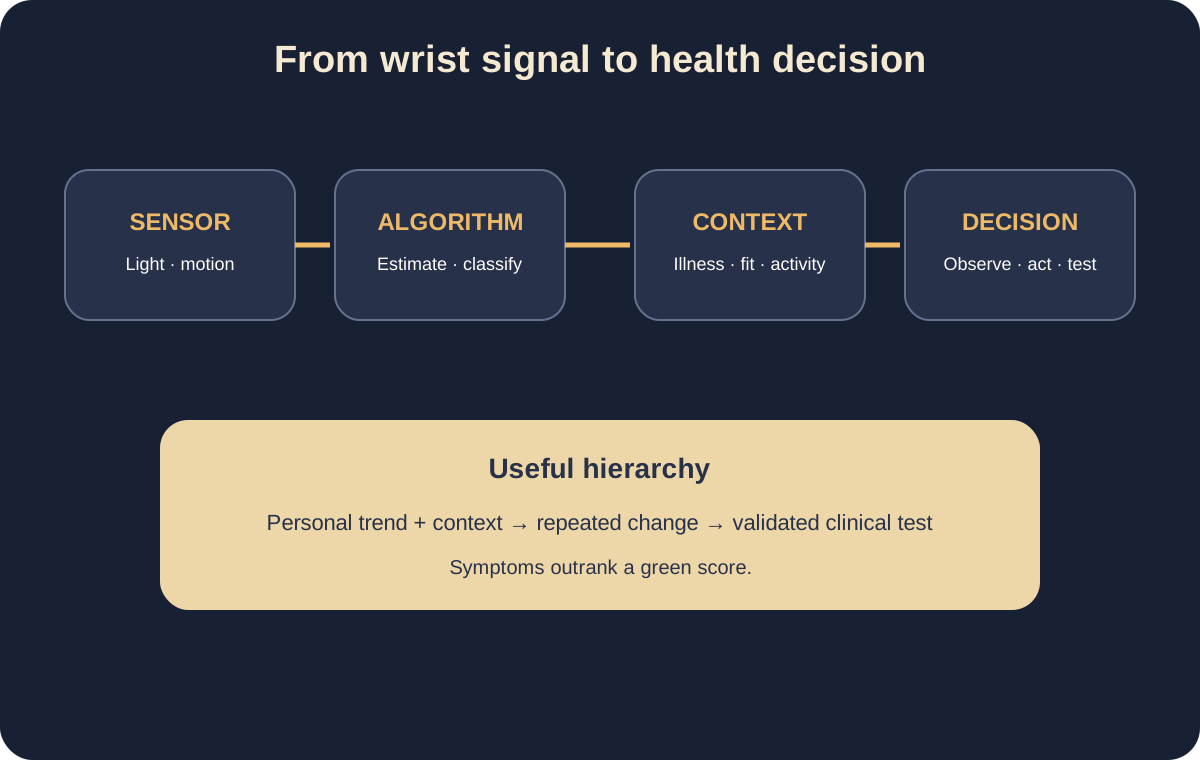
A sensor records a signal: acceleration, reflected light, temperature or electrical activity. Software cleans the signal, classifies behaviour and produces a metric. A dashboard then combines metrics into a readiness, stress or sleep score.
Each layer adds assumptions. A number displayed to one decimal place is not necessarily accurate to one decimal place. Algorithms may change without making old and new scores directly comparable.
Steps and activity
Wrist devices generally identify walking trends reasonably well, but pushing a pram, cycling, arm movement, slow gait and assistive devices can distort counts. Distance depends on stride estimates or GPS. Energy-expenditure estimates have shown larger errors in validation reviews.
Use the same device and wearing position when following a personal baseline. A weekly range is more useful than arguing whether a day contained exactly 8,742 steps.
Heart rate and rhythm
Optical pulse sensors can track steady resting or aerobic heart rate, while rapid movement, poor contact, tattoos, cold skin and arrhythmias can reduce accuracy. Some devices include single-lead ECG features with regulatory clearance for limited uses.
A high or low alert is not a diagnosis. Sit, recheck, note symptoms and follow device instructions. Chest pain, fainting, severe breathlessness or stroke symptoms require urgent care regardless of the watch.
Sleep estimates
Most wrist wearables infer sleep from movement and pulse rather than measuring brain activity. A 2024 meta-analysis found significant differences from polysomnography in total sleep time, efficiency, latency and wake after sleep onset. Sleep-stage estimates are especially model-dependent.
Use the device to notice bedtime, wake time and broad consistency. Do not treat a low deep-sleep score as proof of a disorder. If tracking increases anxiety—sometimes called orthosomnia—take a break or hide detailed stages.
Readiness, stress and recovery scores
Composite scores may combine heart-rate variability, resting pulse, sleep and recent activity. They can prompt reflection, but the weighting is proprietary and population validity may be unclear. Illness, alcohol, travel and hard training can all shift the inputs.
Ask whether the score matches function. If you feel well and one value is unusual, repeat under normal conditions. If you feel unwell despite a green score, attend to symptoms.
A useful personal protocol
- Choose one decision the wearable should support.
- Identify the raw metric closest to that decision.
- Establish a two- to four-week personal baseline.
- Annotate illness, alcohol, travel, menstrual cycle and unusual training.
- Act only on repeated change or a clinician-agreed threshold.
Privacy and equity
Health data may be stored in the cloud, shared with third parties or exposed through account compromise. Review permissions, export and deletion options. Workplace or insurance programmes can introduce coercion even when participation sounds voluntary.
Validation samples may not represent all skin tones, ages, disabilities, body sizes or conditions. A device that works well on average may perform poorly for an individual.
When to bring data to a clinician
Bring a concise trend, dates, symptoms, medicines and the device model—not hundreds of screenshots. Ask whether a validated test is needed. A wearable can help identify timing, but clinical decisions should not depend on an opaque score alone.