Can Weekend Sleep Make Up for a Short Week
Weekend catch-up sleep can offer partial short-term recovery, but it cannot reliably erase chronic restriction and may shift circadian timing.
 Elena MoralesSleep & Recovery editor5 September 2026
Sleep & Recovery · Evidence guide
Sleeping longer after a short week can improve alertness and reduce some sleep pressure. It does not fully reverse every effect of chronic sleep restriction, and a large schedule shift can create its own jet lag.

In short
- Catch-up sleep can provide partial short-term recovery in mood and alertness.
- It cannot reliably erase the metabolic and cognitive effects of repeated restriction.
- Very late weekend sleep may shift the circadian clock and make Monday harder.
- Use extra sleep as a bridge while repairing the weekday schedule.
Sleep debt is a useful metaphor, not a bank account
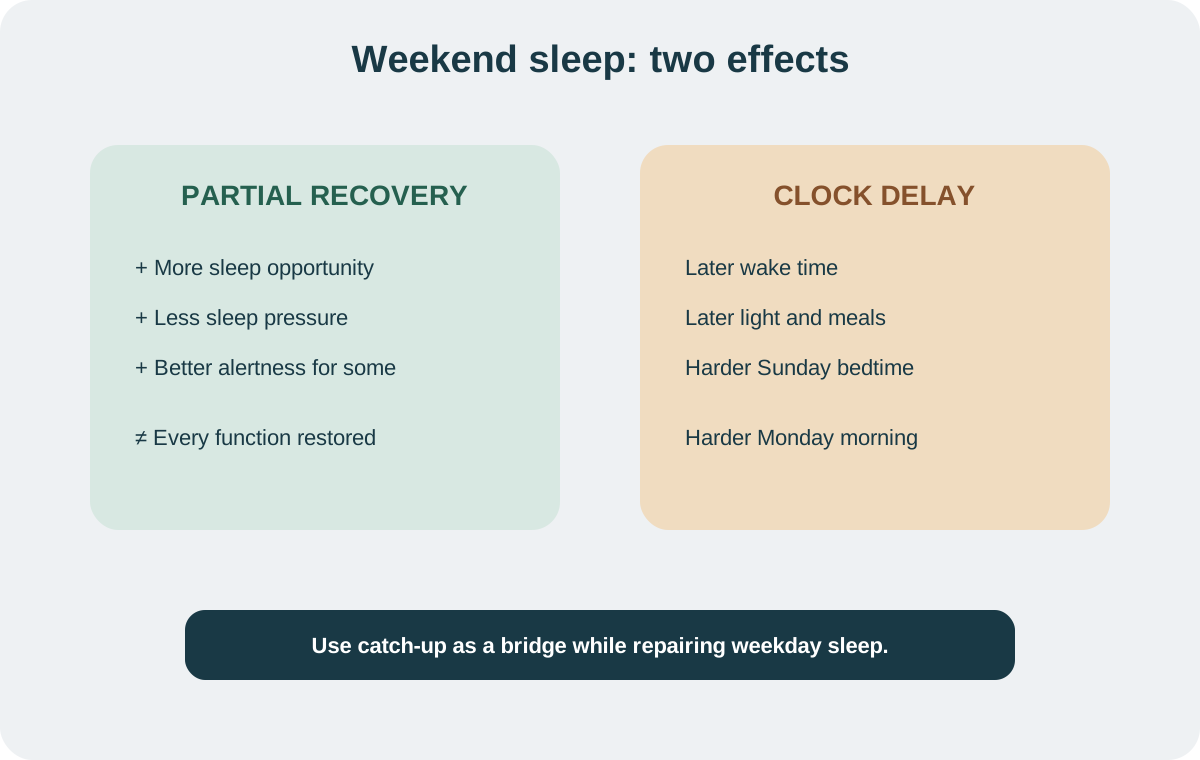
After restricted sleep, pressure to sleep increases and recovery nights may contain more deep sleep. Longer sleep can reduce subjective fatigue. But sleep is not repaid minute for minute, and different functions recover at different rates.
One long night may improve how you feel before attention, reaction time or metabolic regulation has fully returned. That mismatch matters for driving, shift work and safety-critical tasks.
What observational studies suggest
Large population studies often find that moderate weekend catch-up is associated with better outcomes than persistent short sleep. A 2025 meta-analysis found an association with lower depression risk among people short on weekday sleep, especially with roughly zero to two hours of catch-up.
These studies are mostly cross-sectional. They cannot prove that the extra sleep caused the difference, and work schedules, illness and socioeconomic factors can shape both sleep and health.
What experiments add
Controlled sleep-restriction studies show that recovery sleep can improve sleepiness and some performance measures, but one or two nights may not fully normalise all outcomes. Repeated cycles of weekday restriction and weekend recovery can leave residual impairment.
Metabolic studies also caution that weekend recovery does not necessarily prevent adverse responses to recurrent short sleep. The exact result depends on the protocol, participants and outcome.
The social jet-lag trade-off
If you wake at 6:30 on weekdays and noon on weekends, the clock receives two different schedules. Late light, meals and activity can shift timing, making Sunday night sleep onset and Monday waking harder. This difference between biological and social time is often called social jet lag.
You do not need identical sleep times every day. The practical aim is to avoid a repeated swing so large that the weekend resembles travel across time zones.
A sensible recovery weekend
- Go to bed when sleepy rather than forcing an extremely early bedtime.
- Allow extra sleep, but keep wake time within roughly one or two hours when feasible.
- Use a short early-afternoon nap if still sleepy rather than sleeping very late.
- Get outdoor light and gentle movement after waking.
- Protect Sunday evening from late caffeine, alcohol and bright prolonged stimulation.
Needs vary. Shift workers, parents and people recovering from illness may require a different plan.
Repair the source of the short week
Work backward from the required wake time and protect a realistic sleep opportunity. Move bedtime earlier in small steps. Prepare clothes and food earlier, shorten late scrolling and negotiate workload or caregiving support where possible.
Individual habits cannot solve structural sleep loss caused by multiple jobs, unsafe housing, shift rotation or caring responsibilities. Workplace and social changes matter.
When longer weekend sleep is a clue
Needing several extra hours every free day may indicate chronic restriction, but it can also accompany sleep apnoea, depression, medication effects, circadian delay or another condition. Look beyond duration if sleep is unrefreshing.
Seek assessment for loud snoring with breathing pauses, marked daytime sleepiness, drowsy driving, persistent insomnia, restless legs or a large unexplained change in sleep need.
Bottom line
If the week was short, sleeping longer is usually more sensible than deliberately staying deprived. Treat catch-up as partial recovery, not permission to repeat chronic restriction. The durable goal is enough good-quality sleep across the week with a schedule your life can support.