The Worry Loop: How Reassurance Can Keep It Going
Repeated reassurance can briefly lower anxiety while teaching the brain to ask again; gradual delay helps build tolerance for uncertainty.
 Daniel OkaforStress & Emotional Health editor5 September 2026
Stress & Emotional Health · Explainer
Reassurance can bring real short-term relief. When it becomes the only way to tolerate uncertainty, that relief can teach the brain to ask again—and keep the worry loop alive.

In short
- Worry raises uncertainty and an urge to check, search or ask.
- Reassurance briefly lowers anxiety, reinforcing the behaviour.
- Delay and reduce repeated reassurance gradually; do not ignore genuine risk.
- CBT can help when reassurance-seeking is frequent or disabling.
The loop in five steps
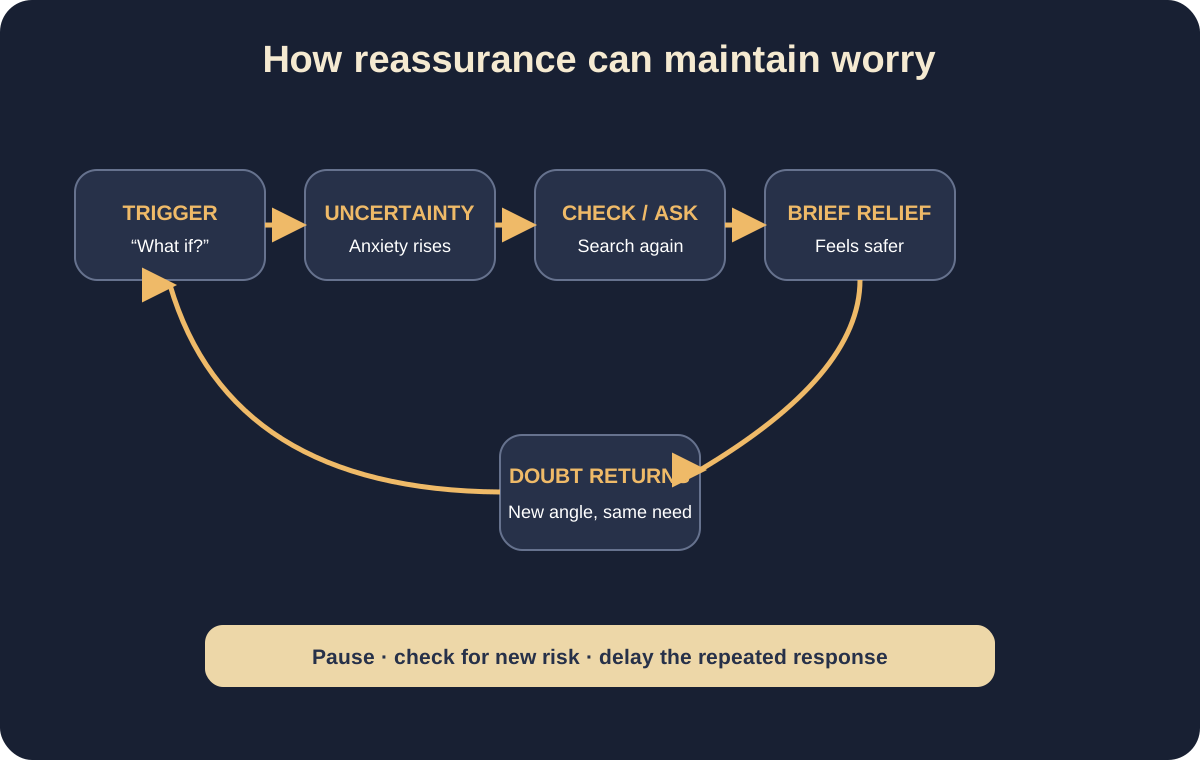
A thought appears: “What if I made the wrong choice?” or “What if this symptom is serious?” Anxiety rises. You ask someone, search online, review a message or check your body. Relief arrives. Later, doubt returns—often with a new angle—and the cycle repeats.
The brain learns from immediate consequences. Because checking reduced distress, it becomes more likely next time. What it does not learn is that uncertainty can be tolerated and anxiety can decline without another check.
Reassurance is not always a problem
Asking a clinician about a new symptom, clarifying a safety instruction or checking an important fact once is sensible. Support from another person can also be humane and grounding. The pattern becomes unhelpful when the same question is asked repeatedly despite an adequate answer, when no answer feels sufficient or when checking expands into hours.
The distinction is function, frequency and consequence—not a moral judgment. Reassurance-seeking is common across anxiety and obsessive-compulsive presentations.
Why facts sometimes fail to settle worry
Worry often asks for impossible certainty. A result that lowers risk to a reasonable level cannot prove that nothing bad will ever happen. The mind finds another exception. Research on diagnostic testing in people with a low probability of serious illness found little overall long-term effect on illness worry or nonspecific anxiety.
More data can therefore become another ritual. Online health searching may begin as information gathering and end with more frightening possibilities, more checking and less trust in the original answer.
A gradual alternative
- Name the urge: “I want reassurance because uncertainty is uncomfortable.”
- Check safety: Is there genuinely new information or an agreed red flag?
- Delay: Wait five or ten minutes before asking or searching.
- Choose one response: Return to the clinician’s plan, write the worry down or continue the valued task.
- Let the wave change: Notice anxiety rise and fall without measuring it every minute.
Increase the delay gradually. The target is not zero support; it is freedom from automatic repetition.
Questions that shift the goal
- Am I seeking information or a feeling of certainty?
- Has anything changed since the last answer?
- What would I do if reassurance were unavailable for one hour?
- Which action matches my values even while doubt is present?
- Is there a pre-agreed threshold for contacting a professional?
How supporters can respond
Repeatedly providing certainty can exhaust relationships, but abrupt refusal may feel rejecting. Validate the feeling without answering the same uncertainty: “I can see this is frightening. We have already checked that question. What would help you ride out the next ten minutes?”
Agree on a plan during a calmer moment. Supporters should not decide whether a new medical symptom is safe; use professional guidance and red-flag plans.
When the worry is about health
Do not use this article to dismiss symptoms. Follow appropriate screening, medication and follow-up advice. Seek urgent care for emergency warning signs. The goal is to reduce unnecessary repeated checking after a reasonable plan exists, not to avoid care.
A clinician can help distinguish proportionate monitoring from compulsive reassurance. Bring a short log of triggers, checks, relief duration and impact rather than a huge unsorted search history.
When to seek mental-health support
Consider support when worry and checking consume substantial time, interfere with work or relationships, cause avoidance or keep spreading to new topics. Evidence-based treatment may include cognitive behavioural therapy and, for OCD, exposure and response prevention delivered by a trained professional.
If anxiety is accompanied by thoughts of self-harm or inability to stay safe, contact local emergency or crisis support now.